
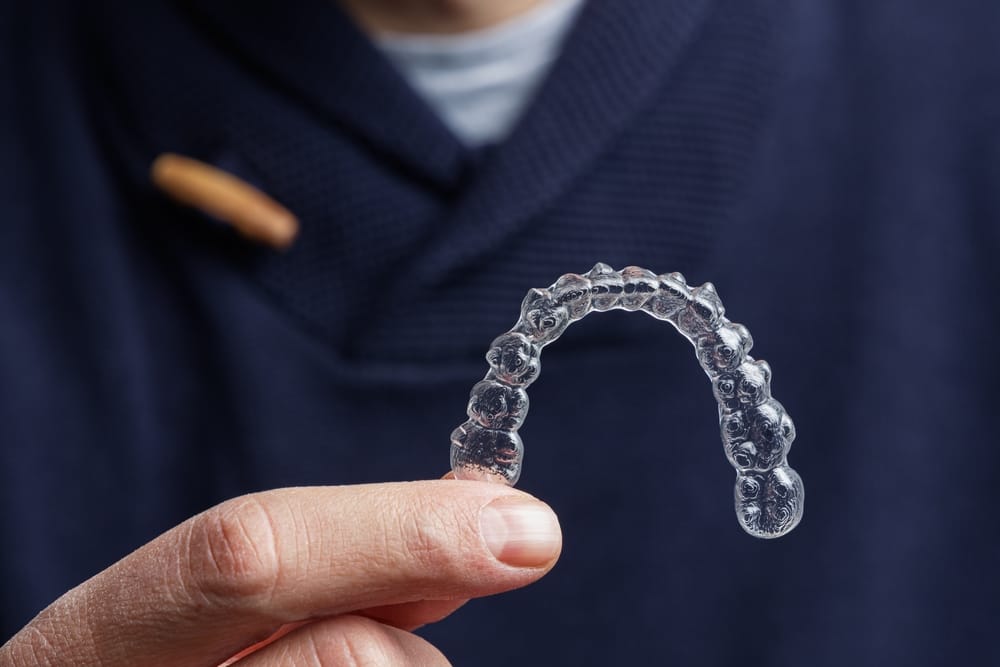
Invisalign attachments cause more worry than they probably should. Many dental patients read that the tooth-colored bumps are ugly and that they wreck enamel. Others assume every case gets stuck with them. Most of these claims fall apart once you look at what the research on tooth movement actually shows. This article breaks down five common myths, one at a time, using findings from clinical studies instead of guesswork.
Key Takeaways
- Attachments use specific shapes bonded to specific teeth to control movements that aligner pressure alone can’t produce.
- Composite resin is chosen for attachments because it mimics tooth translucency, making them far less visible than metal brackets.
- Attachment removal is a studied procedure, and we track wear at every check-in so we replace a failing attachment before it affects results.
- Not every patient needs attachments, and you can choose the material based on individual oral hygiene factors.
- Common questions about what attachments do, how they’re removed, and whether all cases require them are answered below.
Myth 1: Tooth-Colored Bumps Are Just Decorative, They Don’t Actually Move Teeth
Tooth-colored bumps on your teeth have a mechanical job in tooth movement, not a cosmetic one. Each attachment is bonded to a specific tooth. It’s placed where it gives the aligner an anchor point to push or pull against.
Research on attachment survival confirms that each attachment’s shape determines what it can do. The geometries influence tooth movement, especially with rotations. Different tooth-colored shapes match different jobs:
- Rectangular shapes support root control
- Beveled shapes assist with rotation of teeth
- Curved shapes help direct vertical movements like extrusion
If an attachment breaks off, the tooth may stop tracking with the rest of the sequence. That can affect results and extend your treatment plan.
Attachments Compared to Metal Braces
Attachments and metal braces solve the same problem in different ways. A bracket bonded to a tooth gives a wire something to work against. An attachment does the same job for clear aligners, just without visible hardware.
The discreet appearance of clear aligners holds up even with attachments in place. Research on composite resin materials confirms why the material works so well. It has the aesthetic appearance and translucency to simulate natural dentition.
Every attachment gets a custom fit for the tooth it sits on. At a normal talking distance, they read as tooth structure rather than metal brackets or rubber bands.
Myth 2: Attachments Permanently Damage Enamel and Can’t Be Removed Cleanly
The enamel damage worry usually comes from one assumption. Patients think anything bonded to a tooth must leave a mark when it comes off. Attachment removal doesn’t work that way. It’s one of several routine dental procedures. The goal is restoring the natural tooth surface while keeping the enamel intact.
What the Removal Process Actually Involves
Providers treat attachment placement and removal as separate, deliberate steps, not a single rough process. Research comparing different removal tools found real differences in outcome. The gentlest polishing systems gave the best balance between enamel preservation and time efficiency. Rougher tools caused more surface loss.
A typical removal visit follows this pattern:
- The provider identifies each attachment location from your records
- A polishing instrument detaches the composite from the enamel
- The provider checks and smooths the tooth surface before you leave
The instrument matters more than the fact that removal happens at all. Choosing the right tool protects against long-term effects on enamel health, not just how your teeth look that same day.
Myth 3: Every Invisalign Patient Needs Attachments for Complex Movements
Attachments come up so often in Invisalign discussions that it’s easy to assume every patient gets them. That’s not true. Whether your plan includes attachments depends on the specific orthodontic issues and bite issues involved. It’s not a standard checklist applied to everyone.
Simple cases, like mild crowding or small spacing issues along a straightforward path, often move well with aligner pressure alone. Complex cases are different.
Which Movements Actually Need Attachments
Research on attachment use during difficult tooth movements found that attachments are essential for achieving effective extrusion. Skipping them led to movement that didn’t track as planned. Treatment planning weighs a few specific factors before deciding if attachments belong in your case:
- The type and degree of movement required
- The starting position of each tooth
- Whether rotation, vertical movements, or root control is involved
- Any existing bite issues tied to overbite or underbite correction
Rotations, vertical shifts, and root control tend to need a fixed contact point to work against. That’s exactly what an attachment provides. Simpler movements often skip that step entirely, and that’s a normal, expected outcome for many dental patients.
Myth 4: Attachments Wear Down Completely and Stop Working
Attachments do wear down with use. That part is true. But wearing down is not the same thing as failing without warning.
Research measuring attachment wear over a simulated cycle found that force decreased significantly from days 1 to 2 of use. That decline continued as each aligner aged. Repeated insertion and removal drives most of that wear. It’s expected, not a sign that something has gone wrong with your treatment.
What Happens at Each Check-In
Providers build the check-in schedule around this pattern. Here’s what typically happens at each check-in:
- The provider checks each attachment for wear or slipping out of place
- The provider flags any attachment that has lost surface contact
- The provider replaces a worn or detached attachment before the next aligner stage begins
Overbite correction, underbite correction, and general bite correction all depend on the aligner system working as planned. Treatment times can shift slightly if several attachments need replacing at once. Catching wear early protects that timeline rather than derailing it.
Myth 5: All Invisalign Attachment Materials Are the Same
Material choice is a part of treatment planning that often gets skipped over in conversation. Not every set of tooth-colored attachments uses identical composite, and that’s by design rather than accident.
How Providers Choose the Right Material
Some patients have a harder time keeping their teeth clean around attachments. For those cases, providers weigh a few practical factors before picking a material:
- Whether oral hygiene has been a challenge in the past
- How visible the attachments will be given the shape and location
- Whether a patient has had dental problems like plaque buildup before
- How the choice affects patient confidence in the final look
Research on these materials found that fluoride-releasing materials help prevent white spot lesions. That matters most for patients who struggle with plaque control during treatment. The material adds a protective property specifically where oral hygiene is already a known factor. The bonding process itself doesn’t change between materials. A curing light sets the composite the same way regardless of material. The chairside process doesn’t change.
This isn’t a fixed default applied to every patient. If your provider has a reason to choose a different composite, they make that decision before treatment starts. Attachment counts and materials both vary by case. If you have questions about how attachments interact with your own dental history, that’s a conversation to have. Have it before your first aligner tray gets made.
What These Myths About Invisalign Attachments Really Mean for Your Smile
Invisalign attachments serve a specific mechanical purpose. The five myths above cover most of the worry dental patients bring to their first visit. They blend in for a discreet appearance, and providers remove them through a careful process that protects enamel. Providers only add them to a plan when your specific alignment movements call for them.
Patient confidence tends to improve once patients understand the mechanics instead of guessing. At Carmel Valley Dental, Dr. Lindsay Bancroft can walk you through exactly what your treatment plan involves, so reach out to our team with any questions before your first visit.
FAQs
What do Invisalign attachments do?
Attachments are small composite shapes bonded to specific teeth. They give the aligner tray a surface to push or pull against. That lets it control movements like rotations, vertical shifts, and root control that pressure alone can’t produce reliably.
How are Invisalign attachments removed?
A provider uses a polishing or removal instrument to gently detach the composite from the tooth surface. The goal is restoring the natural tooth surface without disturbing the enamel underneath. Providers choose conservative tools whenever the case allows it.
Do Invisalign attachments damage teeth?
Which instrument a provider uses during removal heavily affects outcomes. Conservative tools tend to preserve enamel integrity better than rougher ones. The bonding agent adheres to the composite itself, not into the enamel, so the tooth surface stays intact.
Can Invisalign attachments wear down?
Yes. Repeated insertion and removal of aligner trays causes measurable wear over time. That can reduce the retentive force an attachment provides. Check-ins are scheduled specifically to catch this early.
Do all Invisalign cases have attachments?
No. Providers use attachments when a treatment plan requires complex movements such as rotations, vertical shifts, or root control. Simpler cases may need only a few, or none at all, depending on orthodontic treatment goals.
