
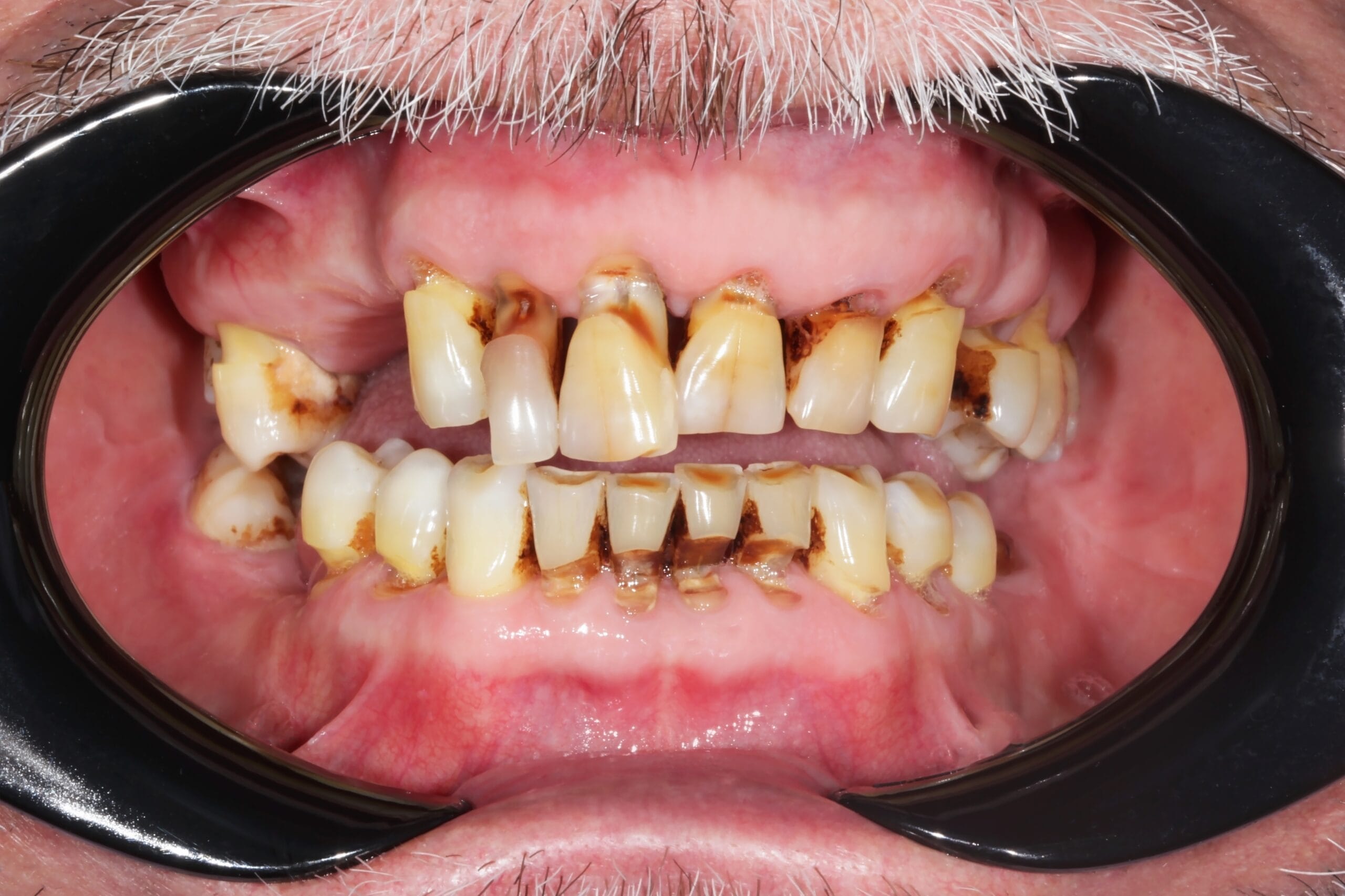
Periodontal Disease
What is periodontal disease?
Periodontal disease is an infection in the gums that can affect the supporting bone and often causes bleeding. Our goal is to help get your gums healthy again.
Periodontitis Affects the Tissues That Support the Teeth
MedlinePlus, from the National Institutes of Health, explains that periodontitis is a chronic infection of the gums that may occur when gum inflammation (gingivitis) is not treated, and that gums may bleed easily when flossing or brushing. This supports the point above about an infection in the gums that can affect the supporting bone.
“Periodontitis is inflammation and infection of the ligaments and bones that support the teeth.”
MedlinePlus, National Library of Medicine, National Institutes of Health (NIH), “Periodontitis”
What are the causes of periodontal disease?
Periodontal disease can have a few different causes. It is caused by a specific type of bacteria, which can be passed along from family member to family member. It can also be caused by buildup underneath the gums that gives bacteria a place to stay, which can lead to gum infection and affect the bone.
Plaque Can Spread Below the Gum Line
The American Academy of Periodontology explains that with time, plaque can spread and grow below the gum line, and that toxins produced by the bacteria in plaque irritate the gums and trigger the body’s inflammatory response. It adds that pockets can form between the teeth and gums and can become infected. This supports the point above about buildup beneath the gums giving bacteria a place to stay.
“With time, plaque can spread and grow below the gum line.”
American Academy of Periodontology (AAP), “Gum Disease Information”
What are the symptoms of periodontal disease?
The symptoms of periodontal disease can be sore gums, bleeding gums, and discomfort when chewing. If the supporting bone is affected more significantly, you may notice that your teeth feel loose.
Gum Disease Can Cause Tender, Swollen, or Bleeding Gums
The National Institute of Dental and Craniofacial Research explains that gums may bleed easily or pull away from the teeth, and that other symptoms can include loose or sensitive teeth and pain while chewing. This supports the point above about the symptoms to watch for.
“Gums may be red, swollen, or tender.”
National Institute of Dental and Craniofacial Research (NIDCR), National Institutes of Health (NIH), “Periodontal (Gum) Disease”
What other conditions are connected to periodontal disease?
The main concern with periodontal disease, aside from wanting to help you keep your natural teeth, is its connection to overall health. Research has found a connection between periodontal disease and cardiovascular health, which is one more reason to keep your gums healthy.
Research Has Found a Link Between Gum Health and Overall Health
The American Academy of Periodontology explains that several studies have shown a link between periodontal disease and other systemic diseases, and that while a causal relationship has not been conclusively established, research suggests periodontal disease may contribute to the progression of other diseases. It adds that scientists believe inflammation caused by periodontal disease may be responsible for the association with heart disease. This supports the point above about gum health and overall health.
“Several studies have shown a link between periodontal disease and other systemic diseases.”
American Academy of Periodontology (AAP), “Gum Disease and Other Diseases”
Can periodontal disease be cured?
Periodontal disease is a long-term condition, but it can be very well managed. Regular dental visits and proper home care are essential to keep the bacteria out from under the gums.
Treatment Focuses on Controlling the Infection
The National Institute of Dental and Craniofacial Research explains that the main goal of treatment is to control the infection, that the number and types of treatments depend on the extent of the gum disease, and that any treatment requires good daily oral health care at home. This supports the point above that periodontal disease can be managed with regular visits and home care.
“The main goal of treatment is to control the infection.”
National Institute of Dental and Craniofacial Research (NIDCR), National Institutes of Health (NIH), “Periodontal (Gum) Disease”
What treatment options are available for fighting periodontal disease in your office?
First, come in regularly to see my hygienist every three months to help remove the bacteria around the gums. During these visits, we also check the health of your gums and address any problem areas immediately. Other treatment options include deep cleaning, using a laser, or employing a specific type of tray with medication that stays under your gums. We can discuss these options when you come in.
Professional Cleanings Every Three Months Help Control Bacteria
MedlinePlus explains that treatment may involve cleaning the teeth thoroughly with tools that loosen and remove plaque and tartar, and that you may benefit from medicines put directly on your gums and teeth. It adds that brushing and flossing are always needed, even after professional cleaning. This supports the point above about regular hygiene visits.
“People with periodontitis should have a professional teeth cleaning every 3 months.”
MedlinePlus, National Library of Medicine, National Institutes of Health (NIH), “Periodontitis”
Are dental teeth cleanings or periodontal treatments painful?
Teeth cleanings and periodontal treatments are designed to be comfortable. We make sure you are at ease, and if necessary, we use a topical anesthetic to help you stay comfortable.
Gum Checks Are Usually Painless
The National Institute of Dental and Craniofacial Research’s brochure explains that the test dentists use to measure the pockets around the teeth, with a tiny ruler called a probe, is usually painless. It adds that in some cases a laser may be used to remove plaque and tartar, which can result in less bleeding, swelling, and discomfort than traditional deep cleaning methods. This supports the point above about comfort during care.
“This test for pocket depth is usually painless.”
National Institute of Dental and Craniofacial Research (NIDCR), National Institutes of Health (NIH), “Periodontal (Gum) Disease: Causes, Symptoms, and Treatments” (2013 brochure)
How can I schedule a dental appointment?
Call our office, and we can help you schedule an appointment.
