
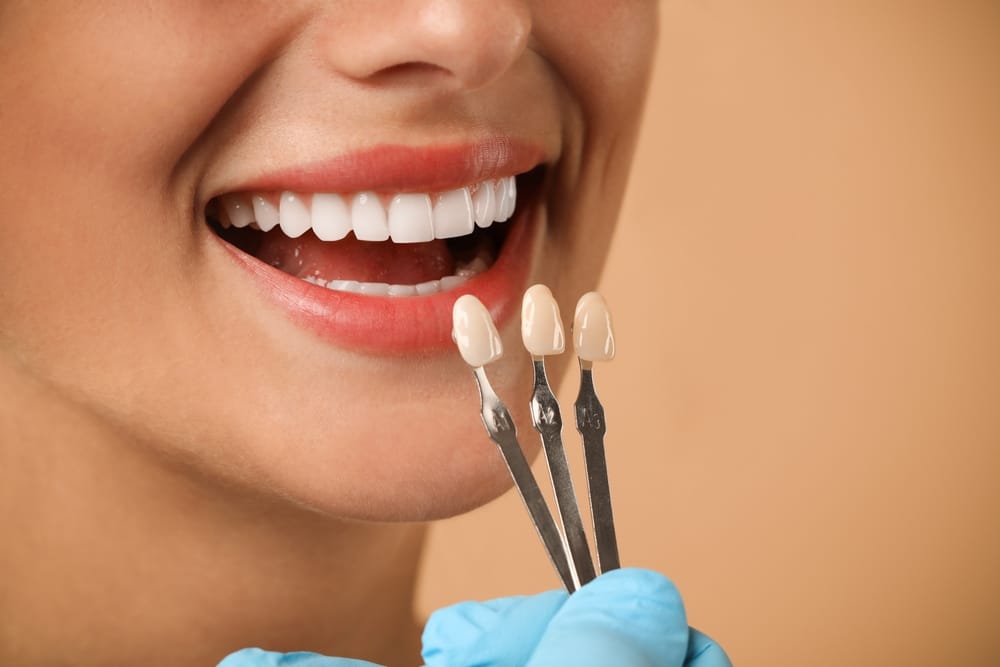
Cosmetic veneers feel different at one week, one month, and one year after placement. Most patients notice shifts in sensitivity, comfort, and how the new smile settles over time. Before-and-after photos show the result, but they skip the part in between.
Knowing what’s normal at each stage helps you track progress and catch a problem early. This guide walks through the physical experience of veneers across three checkpoints, using clinical research rather than guesswork.
Key Takeaways
- Temperature and pressure sensitivity in the first week traces back to the enamel removed during tooth preparation, not the veneer material itself.
- The 4-week follow-up is a clinical checkpoint, not a formality, and persistent bite issues or sensitivity past this point need to be addressed.
- Survey data shows only 53.1% of patients were satisfied with their veneers at long-term follow-up, with gum tissue health being the main factor separating satisfied patients from unsatisfied ones.
- The veneer experience follows a predictable arc, and knowing each phase helps patients set realistic expectations before committing to the procedure.
- Common questions about veneers, what problems they fix, whether they’re considered cosmetic, and how they hold up over time, are answered below.
Tooth Sensitivity, Enamel Removal, and What Happens During Tooth Preparation
Tooth sensitivity is the most common experience during the first week after veneers are placed. Most patients describe it as heightened awareness of temperature and pressure rather than sharp pain.
What the Prep Appointment Actually Involves
During the preparation appointment, your dentist removes a thin layer of tooth enamel from the front surface of each tooth. This creates space for the veneer to sit flush against the tooth surface without looking bulky.
The dental procedure generally follows a predictable sequence:
- A local anesthetic numbs the area so you won’t feel the enamel removal.
- Dental impressions or a digital scan capture the exact shape of your prepared teeth.
- The dental team sends a dental mold to a lab, where technicians custom-make the permanent veneers.
- Temporary veneers protect the teeth in the meantime.
Some practices also use cosmetic imaging during planning. This lets you preview roughly how the final shape and shade will look before any dental procedures begin.
Why Sensitivity Happens (and Why It’s Not the Veneer’s Fault)
Once your dentist places the permanent veneers, the prepared tooth underneath causes the sensitivity, not the veneer material itself. The enamel that once insulated the tooth is gone, so the tooth simply needs time to adjust.
Clinical data backs up this pattern. One case report on layered zirconia veneers documented follow-ups at 24 hours and 15 days post-placement. At the 15-day mark, the patient felt sensitivity in her vital anterior teeth, and fluoride gel therapy resolved it. This timeline is typical for new veneer patients.
What “Normal” Feels Like in Week One
The first week is also when veneers feel most physically noticeable. A few things to expect:
- Veneers may feel slightly bulkier or smoother than your natural teeth at first.
- Cold drinks, hot coffee, and even air can trigger brief discomfort.
- The tongue and lips typically adapt within 7 to 14 days.
Neither bulkiness nor sensitivity means something went wrong.
One thing worth knowing: tooth preparation is irreversible. Once the enamel is removed, the tooth will always need a restoration covering it. This doesn’t make veneers a poor choice, but it does make them a permanent one.
Dental Cement, Natural Anatomy, and Recovery Time After the Dental Procedure
By the one-month mark, most patients stop thinking about their veneers. Getting there involves a specific clinical checkpoint that matters more than most patients realize.
The 4-Week Checkup: What Actually Gets Checked
The 4-week follow-up is the standard checkpoint after veneer placement. At this visit, the dental team typically checks:
- How the veneers are working with the gum line and your bite
- How the soft tissue around the restoration is responding
- Whether the esthetic result matches the original plan
These aren’t purely cosmetic checks. Bite alignment and soft tissue health affect how long the veneers last.
The Sensitivity Timeline, Backed by Research
Research on veneer placement confirms that sensitivity typically resolves by the 4-week recall. One clinical case noted that hypersensitivity finally disappeared after placing the veneer by that same checkpoint.
A separate two-year randomized trial on laminate veneers found that within two weeks, sensitivities after the treatment procedure were completely resolved for nearly all patients studied.
The dental cement that bonds the veneer to the tooth finishes curing in this window. The tooth structure settles around it. If sensitivity is gone and the bite feels even, the veneers are integrating as expected.
Red Flags Worth Raising at This Visit
A few things are worth flagging before the 4-week checkup:
- Bite discomfort that lingers, which may mean the veneer height needs a small adjustment.
- Clicking when chewing, which you should raise rather than ignore.
- Sensitivity that hasn’t improved by the four-week mark.
These issues rarely resolve on their own. Raise them at your dental treatment appointment instead of waiting them out, since dentists can usually fix them quickly when caught early.
Why Natural Anatomy Changes the Timeline
Natural tooth anatomy shapes how the one-month experience feels. Patients whose teeth had significant size or shape differences before placement tend to notice the veneers longer. Patients with more uniform natural teeth often adapt faster.
Recovery time is short for most people. The one-month checkpoint simply confirms the result is working as it should.
Oral Hygiene, Gum Line Health, and Aesthetic Concerns at One Year and Beyond
The one-year picture is where the data gets specific, and where conversations before placement often fall short. Long-term outcomes depend heavily on what happens to the tissue surrounding the restoration, not just the material itself.
What the Long-Term Survey Data Shows
A cross-sectional survey on soft tissue changes after veneer placement found that many patients reported changes in taste or smell, gum tissue changes, and mixed satisfaction with the final result. In fact, only one-half of the respondents were satisfied with their outcome overall. Satisfaction was notably higher among patients who did not develop gum tissue changes.
Gingival hyperplasia, a common finding in that survey, means gum tissue grows over or around the veneer edge. This changes how the result looks. These numbers aren’t a reason to avoid treatment. They’re a reason to go in with accurate expectations.
Why Gum Health Drives Long-Term Results
Gum disease and gum line changes are the primary factors affecting long-term aesthetic results. Periodontal disease in particular can accelerate tissue breakdown around a restoration faster than normal wear.
Veneers sit at or near the gum margin. When tissue becomes inflamed or grows over the edge, the result shifts. This is why oral hygiene matters more after placement than before.
Stained teeth, chipped teeth, tooth decay, and gaps or spaces in teeth are common cosmetic dental problems. Veneers fix these issues well. The outcome at year one depends on what happens to the surrounding tissue after that.
Habits That Protect Your Investment
A few habits consistently produce better long-term outcomes:
- Consistent flossing around the veneer margins
- Regular dental appointments for professional monitoring
- Nightguard use for patients who clench or grind
Jaw clenching puts direct stress on the veneer bond. Any dental restoration holds up better when the surrounding tissue stays healthy.
The Long-Term Survival Numbers
The survival literature reflects this pattern. Veneers placed on healthy teeth with adequate enamel preservation tend to hold up well over the long term. Consistent hygiene helps maintain that result.
Research on veneer longevity notes that the preserved enamel layer plays a paramount role in outcomes. Other studies back this up, showing survival rates ranging from 87% to 96% over extended follow-up.
Routine check-ups aren’t optional maintenance. They’re part of the treatment itself, alongside your own daily care of the tooth surface and surrounding gum tissue.
Is It Time for Cosmetic Veneers? Here’s Your Answer
Cosmetic veneers follow a clear pattern from placement day to year one. Sensitivity shows up in week one, and adjustment completes by month one. Gum health and daily maintenance shape long-term results more than the veneer material alone.
The smile transformation most patients want is achievable, but satisfaction isn’t automatic. What you do after placement matters just as much as the placement itself. Good oral hygiene and routine check-ups make the difference.
If your smile shows stained teeth, chips, or gaps, Dr. Lindsay Bancroft can help you find the right veneers for your goals. Contact our team at Carmel Valley Dental today!
FAQs
Are veneers considered cosmetic?
Yes, veneers are classified as a cosmetic procedure since they improve appearance rather than restore function lost to disease or injury. Some cases overlap with restorative needs, like a broken tooth or significant dental damage. Insurance typically treats veneers as an elective choice rather than a medical necessity.
How much are cosmetic veneers?
Cost depends on the number of teeth involved, the material used, and how complex your case is. There’s no flat price for every patient. A consultation gives you the most accurate estimate, since your dental team can evaluate your teeth first.
Does dental insurance cover cosmetic veneers?
Most dental insurance plans don’t cover veneers, since insurers classify them as elective rather than medically necessary. Some plans offer partial coverage if a veneer also fixes a functional issue, like a broken tooth. Check your policy or ask your provider to confirm your benefits.
What cosmetic problems can dental veneers fix?
Veneers commonly address:
- Stained teeth that don’t respond to whitening
- Chipped teeth, including a chipped tooth from an old injury
- Minor chips along the edges
- Gaps or spaces in teeth
- Teeth that are slightly uneven or misshapen
How long do cosmetic veneers last?
Veneers are a long-term investment when placed on healthy teeth with good enamel preservation and consistent hygiene. Research on veneer longevity confirms the preserved enamel layer plays a paramount role in outcomes. Long-term studies also confirm this, showing survival rates ranging from 87% to 96% over extended follow-up.
