
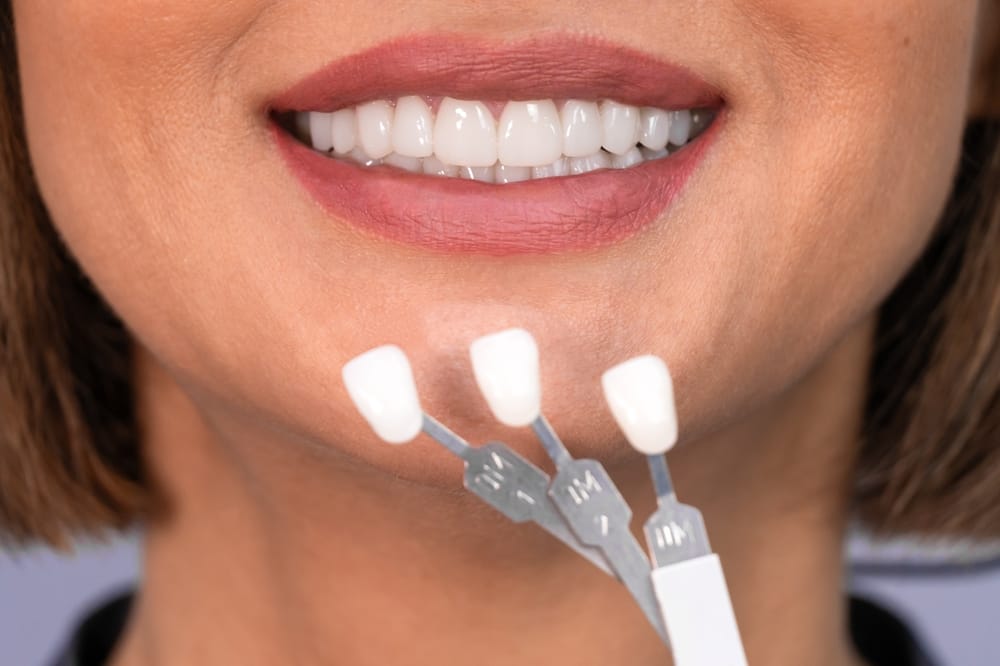
Dental veneers for missing teeth cannot replace the tooth itself. What changes is whether they belong in the plan at all, based on where the tooth sits. A veneer is a composite shell or ceramic shell bonded to an existing tooth surface. No tooth, no surface, no veneer.
What changes between a missing front tooth and a missing back tooth is whether veneers play a supporting role. That role only comes into play once the real replacement is already in place. Here is how to think through that distinction before your next appointment.
Key Takeaways
- Veneers require an existing tooth surface to bond to, so they can’t replace a missing tooth anywhere in the mouth.
- A missing front tooth can call for veneers on the neighboring teeth to match the replacement restoration, but the gap itself still needs a separate structural fix.
- A missing back tooth shifts the entire conversation to chewing function and bone health, where veneers have no role.
- Location determines whether veneers are part of the plan at all, but it never removes the need to replace the missing tooth structurally.
- Get answers to the most common questions patients have about veneers, missing teeth, and what their options actually look like.
What Veneers Actually Do To Natural Teeth (And What They Can’t)
Natural teeth give veneers something to work with. A veneer, whether made of composite resin or ceramic, bonds to the front surface of a tooth that already exists. No tooth means no surface to bond to. That is why veneers cannot replace a missing tooth anywhere in the mouth, front or back.
What A Veneer Can And Can’t Do
- Can: cover chips, cracks, discoloration, and minor shape issues
- Can: improve symmetrical appearance across several teeth at once
- Cannot: fill a gap left by a missing tooth
- Cannot: restore chewing function on its own
That single fact shapes every question about veneers and tooth loss. Preparation itself “required very little preparation: only enamel” ([https://pmc.ncbi.nlm.nih.gov/articles/PMC10757758/]).
What The Placement Process Actually Involves
Placement starts with enamel removal. Dentists reduce a thin layer from the front of the tooth so the veneer sits flush. Dentists take dental impressions so the shell fits precisely, and dental cement secures it permanently. Because enamel does not regenerate, this step is permanent, and dentists rely on it to enhance the bonding of veneers.
Tooth sensitivity after placement is common for a few days. It usually fades once the veneer bonds fully and the tooth settles.
A veneer covers the front face of a tooth, not the whole tooth. The edges, back, and gum line stay exposed. Tooth decay can still develop if oral hygiene slips, and plaque can still build up at the margins. Veneers do not reduce the need for regular dental hygiene.
Can veneers fix broken teeth?
Veneers can cover chips, surface cracks, or worn areas on teeth that are still structurally sound. Broken teeth with damage below the gum line, or with significant missing tooth structure, usually need a dental crown instead.
A veneer works with what is there. When a tooth is gone, a different restoration takes over. A cosmetic dentist checks how much healthy structure remains before recommending a veneer, a crown, or another option.
Cosmetic Dentistry For A Missing Front Tooth: Where Veneers Fit In
Cosmetic dentistry in the front of the mouth follows a higher standard than anywhere else. Front teeth sit inside the smile line, the zone fully visible when you speak or smile. When one is missing, patients usually have two problems to solve at once. The gap needs a structural replacement, and the surrounding teeth need cosmetic refinement to match it.
That second problem is where veneers come in.
Why Adjacent Teeth Often Need Veneers Too
A case report on porcelain laminate veneer rehabilitation shows upper six anterior teeth were prepared. The result is coordinated and symmetrical. A dentist may veneer up to six neighboring teeth to produce consistent color matching across the smile.
A lab fabricates an implant crown or bridge to a specific shade and shape. The natural teeth next to it may not match that shade on their own. Veneers on the adjacent teeth let a dentist bring the surrounding smile in line with the new prosthetic tooth.
What A Smile Assessment Involves
- Checking the shade of remaining natural teeth against the planned restoration
- Reviewing symmetry, contour, and surface texture across the smile line
- Deciding how many adjacent teeth need veneers for a cohesive look
Research on aesthetic implant restoration confirms this area is fully visible during a smile. That visibility means patient expectations run higher here than anywhere else. Patients who address only the gap tend to report lower satisfaction than those who plan both together.
A smile assessment at the start of planning identifies how many adjacent teeth need veneers. This creates that cohesive final result. The prosthetic tooth handles the structural side. Veneers handle the cosmetic dental treatment of what remains.
Treatment Plans For A Missing Back Tooth: Restorative Dentistry Takes Over
Back teeth do not show when you smile, but losing one sets off problems that go well past appearance. Restorative dentistry drives treatment plans here, and veneers do not come up.
Why Chewing Function Comes First
Premolars and molars absorb most of the force of chewing. Research on masticatory adaptation confirms these teeth are the active tools in food comminution. When one is missing, restoring that function is the first priority, not appearance.
- Bone density at the site drops over time since the root no longer loads the jaw
- Adjacent teeth can drift into the open space, creating bite issues
- Gum health shifts around the empty space, and plaque builds up faster in the gap
- Gum disease risk rises when that area stays uncleaned
What Are The Treatment Options?
A dental implant, a fixed bridge, or a removable partial denture are the standard paths for a missing back tooth.
- Dental implant. Titanium posts replace the root and the visible tooth. Dentists generally prefer implants when bone density allows.
- Fixed bridge. Anchors an artificial tooth to the teeth on either side of the gap.
- Partial denture. A removable option that does not address bone loss on its own.
Research on minimally invasive veneer therapy confirms decisions are made on a case-by-case basis. Dentists weigh tooth structure and patient preference. Tooth extraction, when it precedes a planned replacement, is the start of a restorative sequence, not the end of one.
Front Vs. Back: Side-By-Side Comparison
The two situations solve different problems, which is why the plans look so different placed next to each other.
Missing front tooth:
- Primary goal: aesthetics, matching the smile
- Do veneers factor in: sometimes, on adjacent teeth
- Standard fix for the gap: implant or bridge
- What veneers can’t do: replace the missing tooth
Missing back tooth:
- Primary goal: function, restoring chewing
- Do veneers factor in: no
- Standard fix for the gap: implant, bridge, or partial denture
- What veneers can’t do: replace the missing tooth
The one constant across both lists: veneers never replace the tooth that is gone. What changes is whether they show up anywhere else in the plan.
How To Tell Which Category Your Missing Tooth Falls Into
Not everyone thinks about their teeth in terms of front and back, so here is a simple way to check.
- Front teeth: the ones visible when you smile or talk, including incisors and canines.
- Back teeth: premolars and molars, positioned further along the jaw, responsible for most of the chewing work.
If you are not sure which category applies, a dentist can confirm it in a single visit. That answer determines which direction your treatment plan goes.
What if you’re missing teeth in both areas?
This situation is common, and it does not mean two disconnected treatment plans.
- A dentist typically restores chewing function in the back first
- The front tooth’s structural replacement is addressed next
- Cosmetic veneer work on adjacent teeth happens once the restoration’s shade is finalized
A dentist evaluates each situation on its own terms, but plans the two together so results work as one smile.
Get Clear On Dental Veneers For Missing Teeth Before Your Next Visit
Dental veneers for missing teeth can enhance a smile, but they never replace the tooth itself. A missing front tooth may call for veneers on the neighboring teeth, keeping the full smile consistent alongside the structural replacement. A missing back tooth calls for an implant or bridge, and veneers do not factor in. Dr. Lindsay Bancroft and the team at Carmel Valley Dental can walk you through which approach fits your situation, so reach out to our team.
FAQs
Can a veneer close the gap where a missing tooth was?
No. A veneer bonds to the front surface of an existing tooth. There is no surface to bond to when a tooth is missing. Closing the gap needs a structural fix, like an implant, bridge, or another option that fits you.
What is the difference between a veneer and a dental implant?
A veneer is a cosmetic shell placed on an existing tooth to change its shape, color, or surface. A dental implant replaces a missing tooth entirely, including the root. These two restorations serve different purposes. In some front-tooth cases, both may be part of the same treatment plan.
Do veneers on adjacent teeth look natural next to an implant crown?
Yes, when planned carefully. A dentist matches the shade and contour of the implant crown and the veneers so the result looks consistent. Dentists plan color matching and impressions with the final result in mind, which is why an early smile assessment matters.
How long does it take to get veneers placed alongside an implant?
Timing depends on the implant process. Implants require a healing period before the final crown is attached. Dentists often place veneers on adjacent teeth after finalizing the implant crown, matching shade and shape accurately. Your dentist will outline the sequence during your dental procedures appointment.
What happens to the teeth next to a missing tooth if nothing is done?
Adjacent teeth can drift or tilt into the empty space over time. Bone loss occurs at the missing tooth’s site, and gum health nearby can decline. A dental checkup after tooth loss helps track these changes before shifting and bone loss progresses further.
