
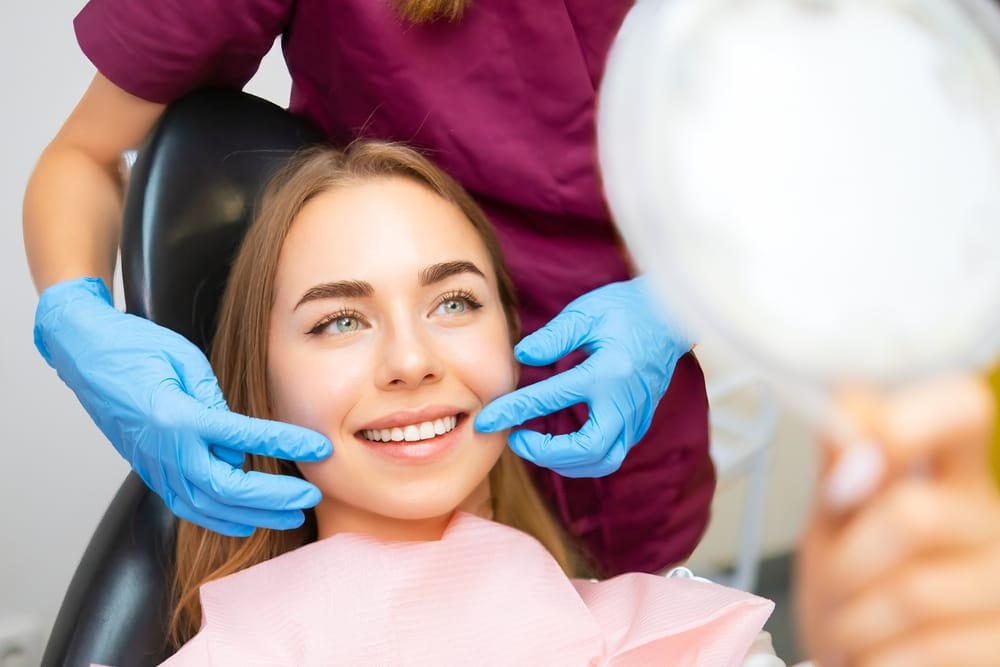
A dentist for yellow teeth doesn’t reach for a whitening gel first for yellow teeth. That single fact is what separates a professional whitening treatment from anything you can buy at a drugstore. The first step is figuring out why your teeth look the way they do, since not every case of discoloration has the same cause.
The sections below walk through how that diagnosis works and what professional whitening actually does to tooth structure. Then we’ll cover why a dental exam changes what treatment is possible.
Key Takeaways
- Extrinsic stains sit on the enamel surface, but intrinsic stains form inside the tooth, and only a professional exam can tell you which type you have.
- Professional bleaching agents reach stain molecules inside the tooth structure at concentrations between 15% and 35%, far beyond what OTC products contain.
- A dentist checks for gum disease, tooth sensitivity, and existing restorations before any whitening begins, because those factors change what treatment is safe and realistic.
- A drugstore product cannot diagnose the source of your discoloration or account for your full dental history. That requires a professional evaluation.
- Get answers to the most common questions about yellow teeth, bleaching safety, and how long whitening results last.
Why Teeth Turn Yellow: Extrinsic Stains vs. Intrinsic Stains
Extrinsic stains and intrinsic stains are two different problems, and they respond to treatment differently. Tooth discoloration doesn’t always come from one single habit either. It can build up gradually from a mix of causes over the years.
Common causes of extrinsic staining include:
- Coffee, tea, and red wine
- Tobacco in any form
- Dark sauces and heavily pigmented foods
- Inconsistent oral hygiene, which lets surface stains build up over time
Intrinsic stains form below the enamel surface, inside the dentin layer of the tooth. Common causes include:
- Aging, as enamel naturally thins over the years
- Certain medications taken during childhood
- Past injury or trauma to a tooth
- Fluoride exposure while teeth were developing
- Untreated tooth decay that reaches the dentin
Because intrinsic stains sit beneath the enamel, surface-level treatments do not reach them.
What can whitening toothpaste and whitening rinses actually do?
Whitening toothpastes and whitening rinses work only on the outer surface of the tooth. Some people also try baking soda or activated charcoal for at-home stain removal, but these methods work the same way: they scrub the surface and stop there.
The American Dental Association explains that these products remove surface deposits from enamel. They won’t significantly affect intrinsic stains that sit deeper in the tooth structure.
If your discoloration is intrinsic, over-the-counter whitening will not get you the result you want. The product cannot reach the source of the problem.
Why a Dental Exam Comes First
Professional teeth whitening separates itself from anything sold over the counter at this exact point. A professional dental exam typically includes:
- Digital x-rays
- A shade assessment using a shade guide
- A review of your dental history and dental needs
That process tells a dentist whether your discoloration is on the surface, inside the tooth, or both. Without that step, you are treating a condition you have not yet identified.
Why Store-Bought Kits Fall Short
Plastic trays from a drugstore skip the diagnosis entirely. They apply a bleaching agent to the surface of your teeth without checking what is causing the discoloration.
They also skip real dental issues, like whether existing dental work will respond to the product. They don’t check whether your enamel and gums can handle the treatment. It isn’t built to evaluate. It’s built to sell.
Professional whitening starts with a diagnosis. That difference shapes every decision that follows.
How Professional Teeth Whitening Works: Hydrogen Peroxide, Carbamide Peroxide, and In-Office Whitening
The reason professional whitening produces results that store-bought products cannot match comes down to concentration and chemistry. Hydrogen peroxide and carbamide peroxide are the active agents in professional treatment, and concentration varies by method:
- Over-the-counter whitening products: generally under 10%
- Take-home professional whitening kits: roughly 10% to 20%
- In-office professional treatment: up to 35%
At the higher end, the bleaching agent oxidizes stain molecules both on the enamel and inside the tooth structure. OTC products work only on the surface and at much lower concentrations.
Harvard Health notes that professional diagnosis matters. Without it, it is hard to determine the source of discoloration or predict how well any bleaching agent will work. Even a strong peroxide whitening gel cannot fix a problem no one diagnosed correctly. The diagnosis is what makes the treatment predictable.
In-Office Whitening vs. Take-Home Teeth Whitening
In-office whitening:
- Completed in a single dental office appointment
- Uses a high-concentration bleaching agent
- Light activation speeds up in-office results
- The dentist isolates soft tissue before applying the gel, which limits gum irritation
Take-home whitening kits:
- A dental lab makes custom whitening trays from a mold of your teeth
- Lower-concentration carbamide peroxide gel worn daily
- Used over several weeks rather than in one visit
- Patients who use unsupervised OTC teeth whitening trays often report more irritation, since those trays don’t fit as precisely
Which option fits your dental needs?
A systematic review of professional whitening methods compared the two approaches directly. It found that dentist-supervised take-home whitening with custom trays and carbamide peroxide produces a lower recurrence of treatment. This holds true compared with in-office bleaching alone.
That does not make one method better in every case. It means the right choice depends on your situation, your timeline, and what your dentist recommends after reviewing your teeth.
The gap between professional and OTC treatment is not just about strength. It is about fit, supervision, and knowing which type of stain you are treating before the process starts.
What a Dental Office Evaluates Before Any Whitening Procedure
Before any whitening treatment starts, a dentist checks three things no store-bought product accounts for:
- Existing dental restorations
- Tooth sensitivity and gum health
- A treatment plan matched to your dental needs and cosmetic goals
Existing Restorations: Crowns, Veneers, and Fillings
Dental crowns, porcelain veneers, dental bridges, and composite fillings do not respond to peroxide whitening gel. Older metal fillings and the dental cement holding certain restorations in place won’t lighten either. These materials do not change color the way natural, tooth-colored enamel does.
Researchers note that existing restorations may not respond predictably to bleaching procedures. That’s exactly why a dentist maps them out before any treatment begins. If you have visible restorations in your smile, whitening your natural teeth without accounting for them creates an uneven result.
Tooth Sensitivity and Gum Disease
Tooth sensitivity and gum disease also affect what whitening is appropriate. Applying bleaching agents to a tooth with compromised enamel or inflamed gum tissue can cause real discomfort. This inflammation is sometimes called gingival irritation. Dental professionals treat those conditions before whitening begins.
Shade Assessment and Smile Design
The shade assessment adds another layer of information. Using a shade guide, the dentist records your current tooth color and sets a target. That way, you know roughly how many shades brighter to expect before treatment even starts.
The Journal of the American Dental Association confirms that dentists have options for helping bring a whiter smile. Those options extend well beyond a single appointment.
A broader smile design plan might fold in dental cleanings, desensitizing treatments, dental bonding, dental implants, or other cosmetic services. Whitening only addresses surface and internal stains. It doesn’t cover the rest of the smile.
That is what a dental practice brings to the whitening process. It’s a clinical review of your teeth, gums, restorations, and realistic outcomes before any treatment begins. A drugstore product does none of that.
Talk to a Dentist for Yellow Teeth Before You Buy Another Kit
A dentist for yellow teeth doesn’t treat every case the same way, because the cause determines the treatment. Professional whitening uses bleaching agents at concentrations that reach stain molecules inside the tooth, not just on the surface. It also starts with a clinical exam that checks for gum disease and sensitivity. That exam also flags existing restorations that would not respond to bleaching at all. None of that happens with a store-bought kit.
Not sure what’s behind your discoloration or which whitening option actually fits your smile? Our team of dental professionals can walk you through it during a real consultation, not a guess from a drugstore box. Contact Carmel Valley Dental today to get answers specific to your teeth.
FAQs
Why are my teeth yellow?
Teeth turn yellow for two main reasons. Extrinsic stains from food, beverages, and tobacco build up on enamel over time. Intrinsic discoloration forms inside the tooth from aging, medication, or past injury. A dental exam with a shade assessment identify which type you have.
How do you remove brown stains from teeth naturally?
Brown surface stains from coffee, tea, or tobacco may respond to consistent brushing and regular dental cleanings. Natural remedies have limited clinical evidence and cannot reach stains below the enamel surface. A dentist can confirm whether the staining is extrinsic and recommend a treatment that fits your situation.
Is bleaching your teeth bad?
Professional bleaching is safe under dental supervision. The most common side effects are tooth sensitivity and mild gum irritation. A dentist reviews your enamel condition, gum health, and existing restorations before treatment starts. This confirms that whitening is appropriate for you.
How long does teeth whitening take?
In-office whitening typically takes one appointment, and light activation speeds the process. Patients wear dentist-supervised take-home whitening with custom trays daily over several weeks. Research suggests take-home treatment with carbamide peroxide may produce longer-lasting results, though the right approach depends on your specific situation.
How do you prevent teeth from yellowing?
Limiting stain-causing foods and beverages, avoiding tobacco products, and maintaining good oral hygiene all slow surface stain buildup. Regular dental cleanings remove deposits that brushing misses. For discoloration caused by aging or medication, prevention is limited, and professional treatment is often the most effective path forward.
